
In a world of constant change and unpredictability, our ability to navigate uncertainty determines not just our success, but our very survival and well-being.

The modern landscape presents challenges our ancestors never imagined: economic volatility, technological disruption, global pandemics, and rapidly shifting social norms. Yet amid this turbulence, some individuals and organizations not only survive but thrive. What separates those who crumble under pressure from those who emerge stronger? The answer lies in understanding and harnessing the power of belief—not blind optimism, but strategic confidence grounded in resilience.
🧭 Understanding High-Uncertainty Environments
High-uncertainty environments are characterized by unpredictable outcomes, limited information, and consequences that can’t be fully anticipated. Unlike risk, which can be calculated and managed through probability, uncertainty involves unknown unknowns—factors we haven’t even considered yet.
These environments manifest across multiple domains of modern life. Business leaders face market disruptions from unforeseen competitors. Healthcare professionals navigate novel diseases without established protocols. Parents raise children in a world where traditional career paths have dissolved. Students prepare for jobs that don’t yet exist.
The psychological toll of sustained uncertainty is well-documented. Research shows that ambiguity activates our brain’s threat-detection systems more intensely than known dangers. This explains why many people prefer a guaranteed negative outcome over an uncertain one—our minds crave closure and predictability.
The Neuroscience Behind Uncertainty Stress
When faced with uncertainty, our amygdala—the brain’s alarm system—becomes hyperactive. Stress hormones like cortisol flood our system, narrowing our focus and impairing our ability to think creatively. This biological response, designed to help us escape immediate physical threats, becomes counterproductive in complex modern challenges that require nuanced thinking.
Understanding this neurological reality is the first step toward managing it. Once we recognize that our discomfort with uncertainty is hardwired rather than a personal failing, we can develop strategies to work with our biology rather than against it.
💪 The Foundation: What Belief Really Means
Belief, in this context, transcends simple positive thinking or wishful optimism. It represents a complex cognitive framework that combines self-efficacy, outcome expectancy, and growth mindset. True belief acknowledges reality while maintaining confidence in our capacity to respond effectively.
Psychologist Albert Bandura’s concept of self-efficacy captures this distinction perfectly. Self-efficacy isn’t about believing everything will work out—it’s about believing you have the capabilities to influence outcomes, learn from setbacks, and adapt to changing circumstances.
The Three Pillars of Productive Belief
- Competence Confidence: Trust in your existing skills and your ability to develop new ones as needed
- Adaptive Thinking: Flexibility to revise strategies and perspectives when circumstances change
- Meaning Making: Capacity to find purpose and direction even when external markers disappear
These pillars work synergistically. Competence confidence gives you courage to take action. Adaptive thinking ensures your actions remain relevant as situations evolve. Meaning making provides the motivation to persist when immediate results aren’t visible.
🎯 Building Resilience Through Calibrated Confidence
Resilience isn’t about being unbreakable—it’s about breaking well and recovering quickly. In high-uncertainty environments, resilience becomes your most valuable asset, allowing you to experiment, fail, learn, and iterate without suffering catastrophic psychological damage.
The key is calibrated confidence: optimism balanced with realism. Research by psychologist Julie Norem on “defensive pessimism” shows that for some people, imagining potential problems and preparing for them reduces anxiety and improves performance. This isn’t negativity—it’s strategic anticipation.
Practical Strategies for Resilience Development
Develop a resilience toolkit by incorporating these evidence-based practices into your routine:
- Cognitive Flexibility Training: Regularly challenge your assumptions and seek alternative explanations for events
- Stress Inoculation: Deliberately expose yourself to manageable challenges to build psychological immunity
- Social Connection: Maintain strong relationships that provide support and diverse perspectives
- Physical Foundation: Prioritize sleep, exercise, and nutrition as non-negotiable resilience factors
- Reflection Practices: Use journaling or meditation to process experiences and extract lessons
Each of these practices strengthens different aspects of resilience. Cognitive flexibility prevents rigid thinking that makes adaptation impossible. Stress inoculation builds confidence through accumulated evidence of your capability. Social connections provide both emotional support and practical resources. Physical health ensures your biology supports rather than undermines your psychological efforts.
📊 The Decision-Making Framework for Uncertain Times
When information is incomplete and outcomes unpredictable, traditional decision-making models often fail. We need frameworks specifically designed for uncertainty, approaches that embrace ambiguity rather than trying to eliminate it.
The OODA Loop—Observe, Orient, Decide, Act—developed by military strategist John Boyd, offers a powerful alternative. Instead of making perfect decisions, focus on making faster cycles of good-enough decisions, learning from feedback, and adjusting rapidly.
| OODA Phase | Key Actions | Mindset Focus |
|---|---|---|
| Observe | Gather current information without filtering | Open curiosity |
| Orient | Interpret data through your values and experience | Self-awareness |
| Decide | Choose a course based on available information | Decisive confidence |
| Act | Execute quickly and observe results | Learning mindset |
The power of this framework lies in its cyclical nature. You’re never making one final decision but engaging in continuous reassessment. This aligns perfectly with high-uncertainty environments where conditions shift rapidly.
Embracing Reversible Decisions
Amazon founder Jeff Bezos distinguishes between Type 1 and Type 2 decisions. Type 1 decisions are irreversible or very difficult to reverse—they deserve careful analysis. Type 2 decisions are reversible—they should be made quickly by empowered individuals or small teams.
In uncertain environments, maximize Type 2 decisions. This creates a culture of experimentation where belief is expressed through action rather than endless analysis. You build confidence not by waiting for certainty but by accumulating evidence of your ability to adjust course.
🌱 Cultivating a Growth-Oriented Belief System
Stanford psychologist Carol Dweck’s research on fixed versus growth mindsets revolutionized our understanding of achievement. Those with fixed mindsets believe abilities are static—you either have talent or you don’t. Those with growth mindsets believe abilities develop through effort, strategy, and input from others.
In high-uncertainty environments, growth mindset becomes essential. When you don’t know what skills will be required next month or next year, your ability to learn matters more than what you currently know. Your belief in your capacity to grow trumps any specific expertise.
Practical Growth Mindset Applications
Transform your internal dialogue by reframing challenges:
- Replace “I can’t do this” with “I can’t do this yet“
- Change “This is too hard” to “This will require different strategies”
- Shift from “I failed” to “I learned what doesn’t work”
- Move from “I’m not good at this” to “I’m building this skill”
These aren’t mere semantic games. Language shapes thought, and thought drives behavior. By consistently using growth-oriented language, you literally rewire your brain’s response to challenges, building neural pathways that support resilience and adaptation.
🔄 Learning Loops: Converting Uncertainty into Intelligence
Every uncertain situation contains information—signals hidden in the noise. Those who navigate uncertainty successfully develop sophisticated learning loops that convert ambiguity into actionable intelligence.
This requires moving beyond simple trial and error to structured experimentation. Define hypotheses clearly, even if informally. Before acting, articulate what you expect to happen. After acting, compare results to expectations and analyze discrepancies. This systematic approach accelerates learning exponentially.
The After-Action Review Process
Borrowed from military practice, after-action reviews provide a structured way to extract lessons from experience:
- What did we expect to happen?
- What actually happened?
- Why was there a difference?
- What will we do differently next time?
This simple framework, applied consistently, transforms every experience into a learning opportunity. Over time, you build a sophisticated mental model of how things work in your specific domain, enabling better intuitive decisions even amid uncertainty.
🤝 The Social Dimension of Confident Navigation
No one navigates uncertainty alone, despite cultural myths of the self-sufficient individual. Research consistently shows that social support is among the strongest predictors of resilience. But not all social connections are equally valuable in uncertain times.
Seek relationships that provide three distinct forms of support: emotional validation, diverse perspectives, and practical resources. Emotional validation helps you maintain psychological equilibrium. Diverse perspectives challenge your assumptions and reveal blind spots. Practical resources expand your options for action.
Building Your Uncertainty Navigation Team
Deliberately cultivate a personal advisory network including people who excel at different aspects of uncertainty navigation. You might include someone particularly skilled at emotional regulation, another with exceptional analytical abilities, and a third known for creative problem-solving. When facing complex challenges, consult this network not for answers but for perspectives that expand your own thinking.
⚡ Maintaining Momentum When the Path Isn’t Clear
Perhaps the greatest challenge in high-uncertainty environments is maintaining forward momentum when you can’t see the destination. This is where belief becomes most critical—not belief in specific outcomes, but belief in the value of movement itself.
Think of it as strategic experimentation rather than committed action. Each step forward generates information that informs the next step. You’re not marching toward a fixed destination but exploring terrain, discovering opportunities that weren’t visible from the starting point.
This mindset shift—from execution to exploration—reduces anxiety dramatically. Instead of fearing that you’re on the wrong path, you recognize that you’re gathering intelligence. There are no wrong paths, only paths that provide different information.
Small Wins Strategy
Break overwhelming uncertainty into manageable pieces by focusing on small wins. Psychologist Karl Weick’s research shows that small wins have a disproportionate psychological impact, building confidence and motivation that enable larger challenges.
Identify something achievable within 24-48 hours that moves you toward your general direction, even if the ultimate destination remains unclear. Complete it. Acknowledge it. Use the confidence boost to tackle the next small win. This creates a virtuous cycle where action generates confidence, which generates more action.
🎭 Reframing Failure as Essential Feedback
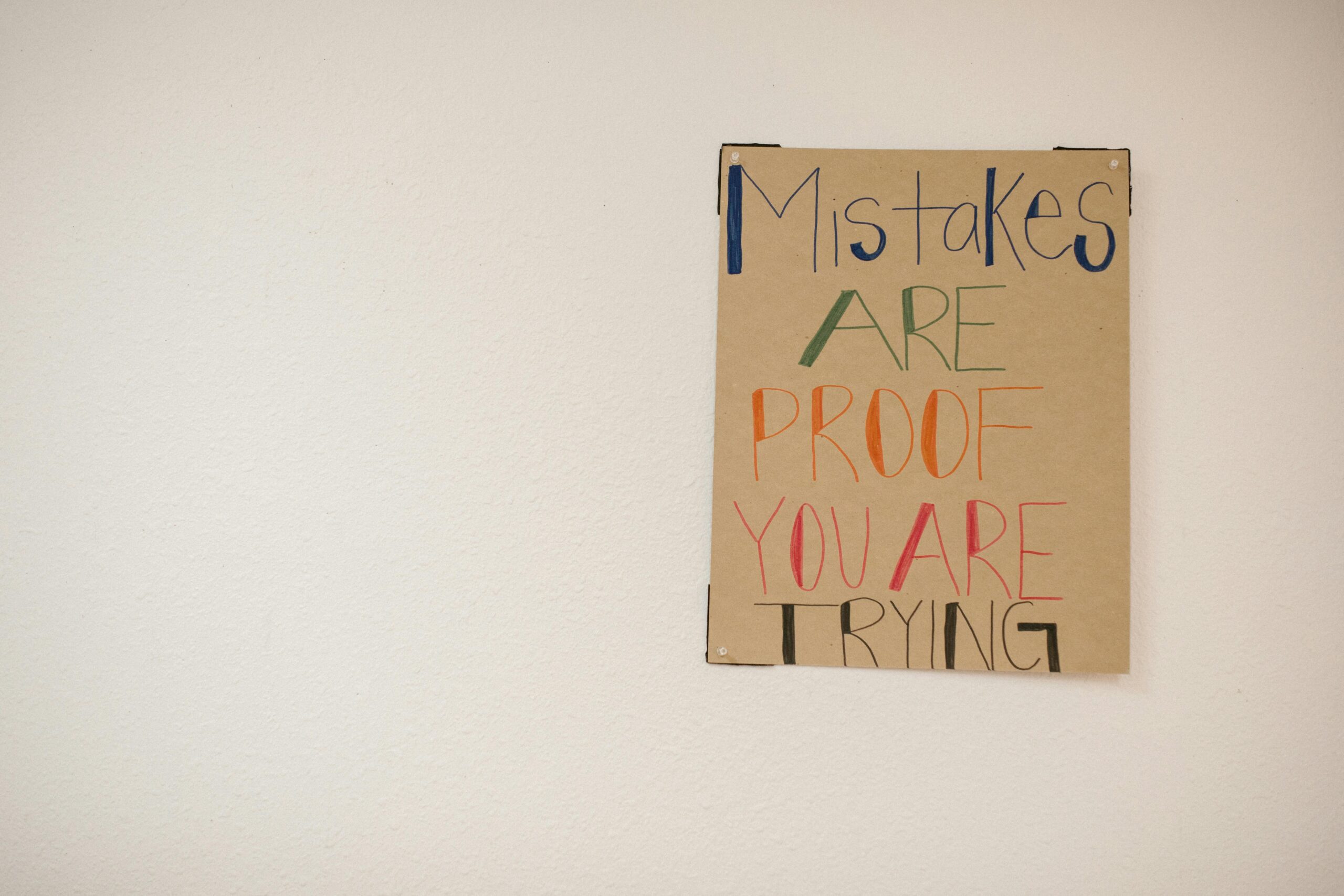
In high-uncertainty environments, failure isn’t just possible—it’s inevitable and valuable. The question isn’t whether you’ll fail but how you’ll interpret and respond to failure. Those who thrive in uncertainty have fundamentally reframed their relationship with setbacks.
Failure provides information that success cannot. Success confirms your existing approach works—valuable, but limited. Failure reveals hidden assumptions, unexpected variables, and boundaries of your current model. It’s expensive information, but it’s often the most valuable information available.
This doesn’t mean celebrating failure or failing carelessly. It means structuring experiments so failures are informative rather than catastrophic, and extracting maximum learning from inevitable setbacks. You’re not trying to avoid failure—you’re trying to fail intelligently.
🌟 Living with Productive Uncertainty: A New Paradigm
The ultimate goal isn’t eliminating uncertainty but developing a different relationship with it. Instead of viewing uncertainty as a problem to solve, recognize it as a permanent feature of complex, dynamic systems—including your life and work.
This perspective shift is liberating. Once you stop waiting for certainty before moving forward, you reclaim agency. Once you stop viewing ambiguity as threatening, you can perceive the opportunities it contains. Once you stop demanding guarantees, you free yourself to experiment boldly.
Those who navigate uncertainty most successfully have developed what might be called “uncertainty tolerance”—the ability to remain calm and effective even when multiple outcomes remain possible. This isn’t indifference or resignation but active comfort with ambiguity, grounded in confidence in your adaptive capacity.
The power of belief in high-uncertainty environments isn’t about convincing yourself everything will work out exactly as planned. It’s about trusting your ability to handle whatever emerges—to learn, adapt, connect, and persist through challenges you cannot yet imagine. This confidence, built through deliberate practice and supported by evidence of past adaptation, becomes your compass when external markers disappear.
By developing calibrated confidence, maintaining learning loops, cultivating growth mindset, and building resilience through strategic action, you transform uncertainty from an obstacle into an opportunity. The unknown becomes not a threat but an invitation—an invitation to discover capabilities you didn’t know you possessed, to create solutions that don’t yet exist, and to become someone stronger and more capable than you are today. 🚀